
Art · Issue 01
Kyan Patel
First of a Kind
By Aarna Patel
From a painting for a friend's college commitment to commissions for professional and private clients, fine artist Kyan Patel is building a life around two interests he once thought belonged in separate worlds.


01
Introduction
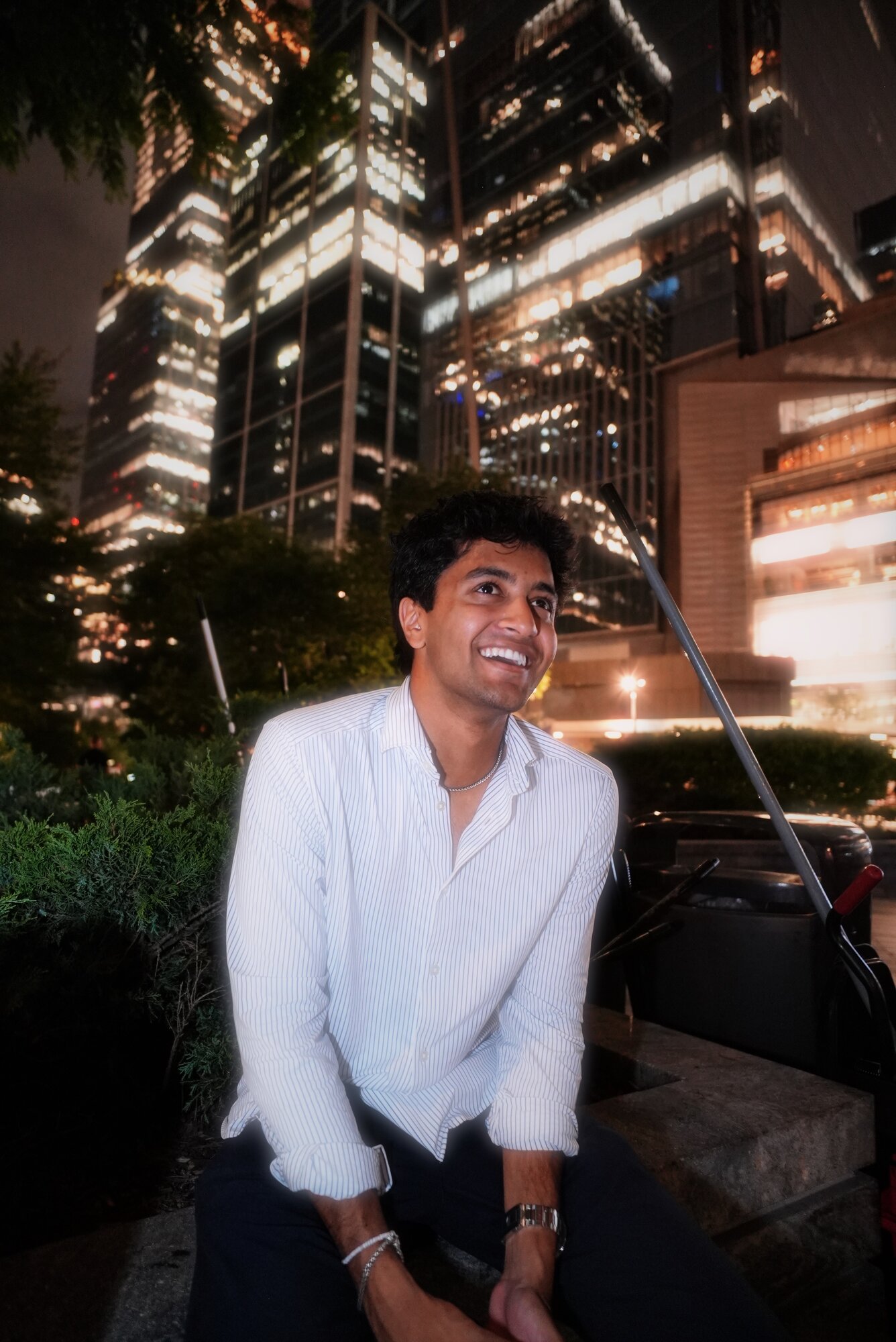
Before the background is painted, before the rest of the art has taken shape, Kyan works through its smallest details. He finishes an eye, then works outward, completing the face before moving to an arm, the body, or the jewelry. Each section takes shape before he begins the next. He likes seeing where the work is going—having something complete that shows him what the rest can become.
That desire to keep building extends beyond the canvas. As his business grows, Kyan is thinking about how to take his work further into the fine art world.
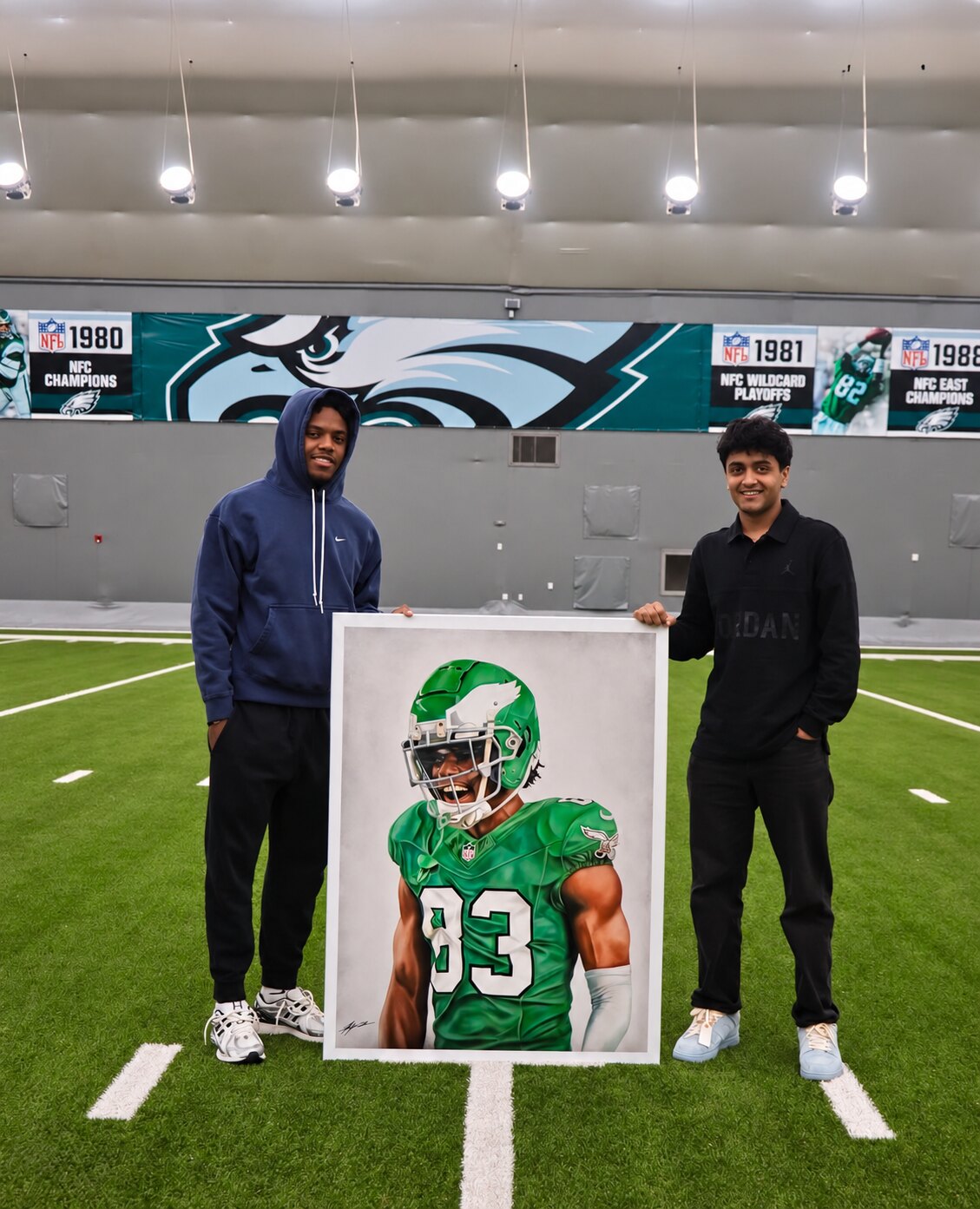
Originally from Richmond, Virginia, Kyan is a senior and Presidential Scholar at Wake Forest University, double majoring in economics and studio art. Alongside his degree, he is building a fine art business around large, realistic oil paintings commissioned by professional and college athletes. His work spans football, basketball, soccer, and women’s sports, with commissions in music opening another direction for his practice.
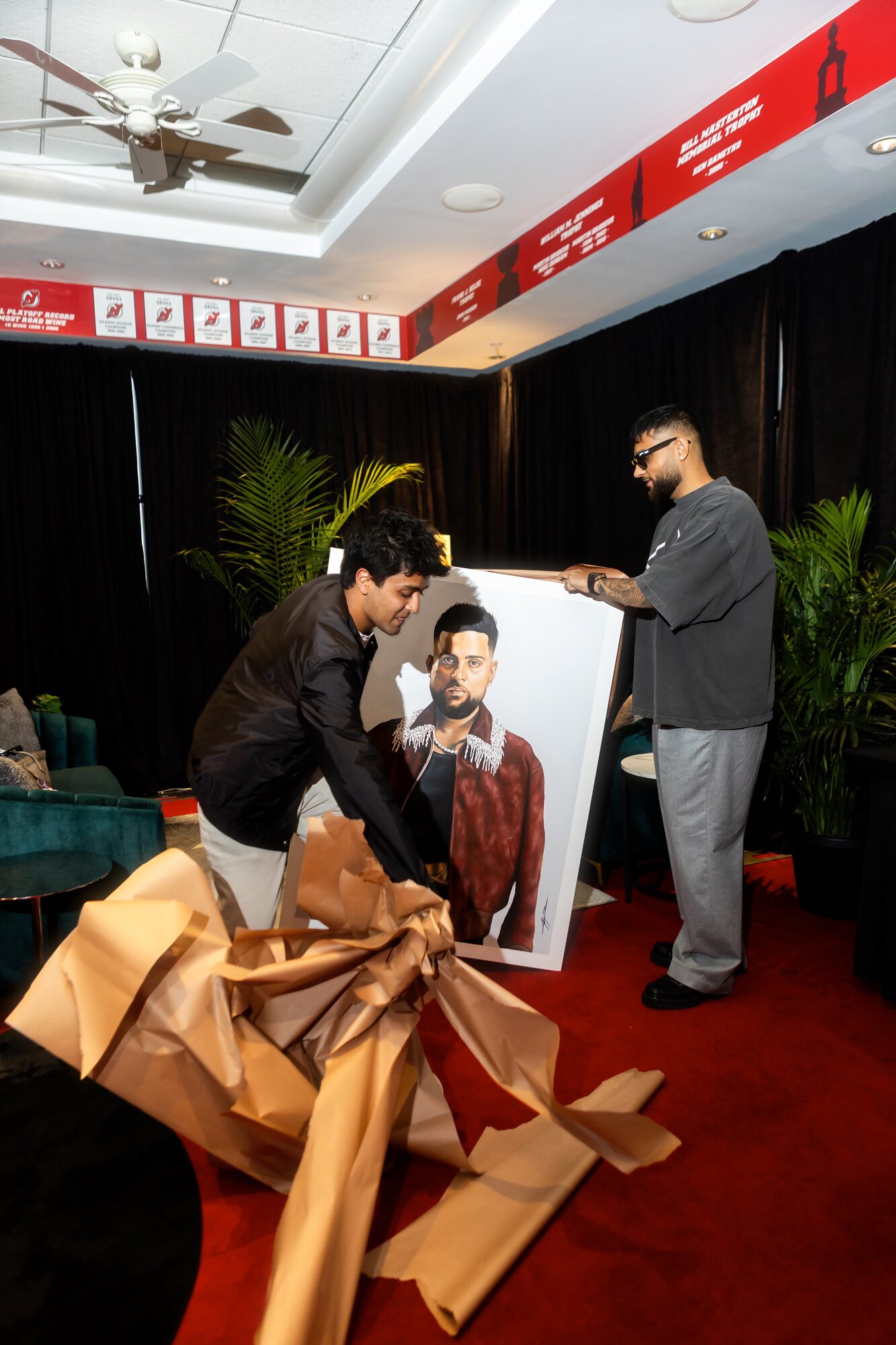
The paintings are made in collaboration with their subjects, often for their homes. A client helps choose the image and the moment it represents; Kyan gives that moment a physical form.
Before he built a business around his paintings, his mother suggested creating one for a high-school friend’s college commitment announcement. Kyan initially wanted no part of it. That painting became a turning point and opened the path towards the business he is building today.
“I thought art and sports were two worlds that could never come together. As I got older, I realized how wrong I was.”
— Kyan Patel
02
The Beginning
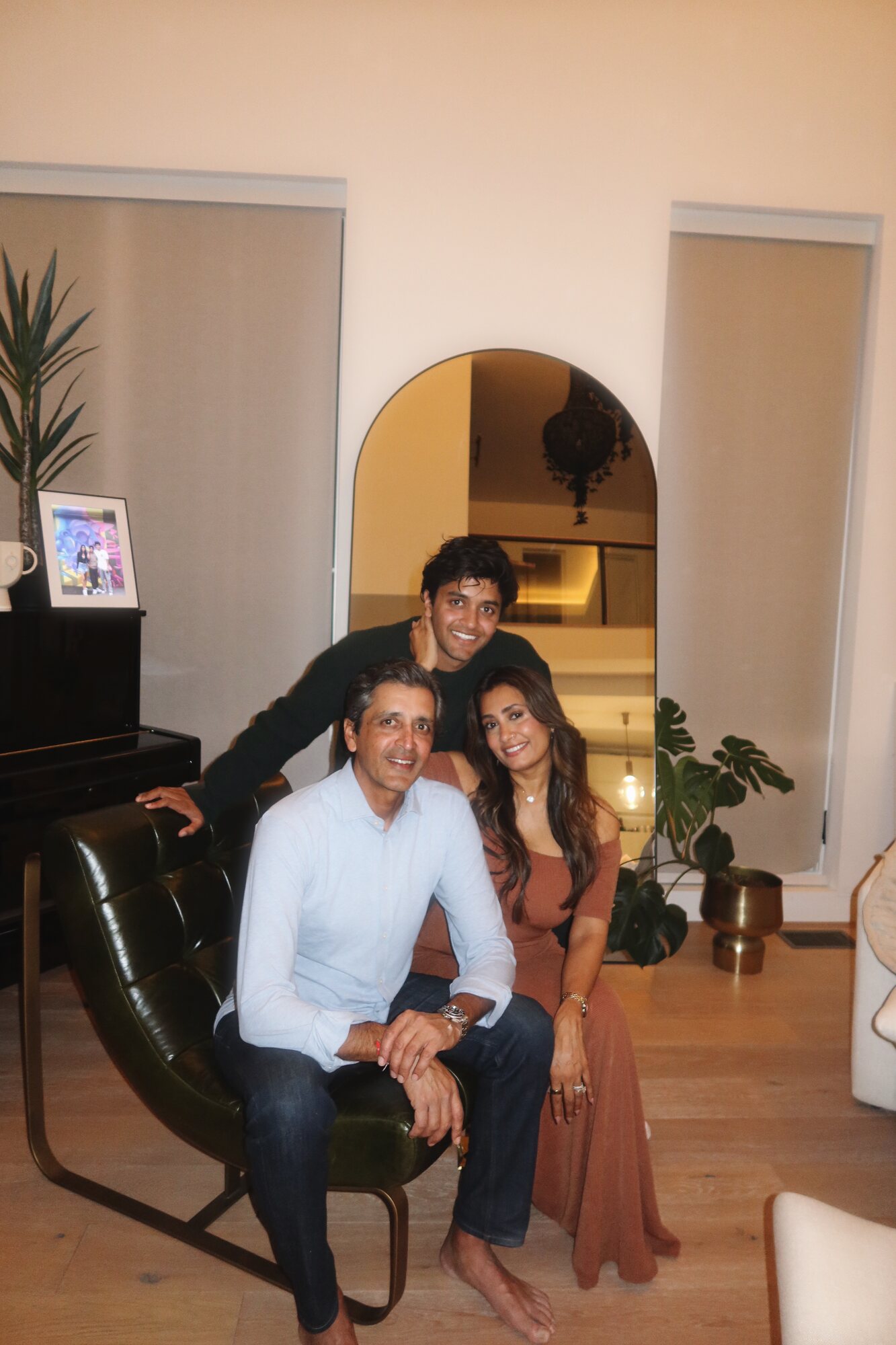
Art was always present in Kyan's childhood. His mother, jewelry designer Kamal Patel, encouraged it at home, and drawing came naturally to him. He took a few classes, but soccer held most of his attention. For a long time, art was something he could do without being something he imagined building a future around.
His mother had already shown him what a creative career could look like. She studied at Pratt in Brooklyn, worked in graphic design, and eventually moved into fine jewelry. To Kyan, she is his biggest inspiration.
Both parents encouraged him to pursue what he enjoyed while he was still figuring out what it might become. Their support gave him room to keep drawing and painting and to discover how far he wanted to take it.
During his junior year of high school, his mother suggested painting Andre Green Jr., a highly recruited football player preparing to announce his college commitment. The artwork could become part of the announcement, giving Andre something distinctive to unveil.
Kyan resisted. He was hesitant to put himself out there, but his mother encouraged him to try. Eventually, he agreed to ask. Andre was interested.

The painting showed Andre in his high-school jersey, with UNC colors appearing to rip through it. At the announcement, Andre revealed his college choice and the artwork. Local news outlets were there, and when Kyan posted the painting that night, the encouragement from his school and community gave him a reason to keep going.
He had kept his art largely to himself. Now he was sharing it with the world.
Looking back, he is hard on the painting's quality. Its importance lies in what it opened up. Encouraged by the response, he began reaching out to other athletes.
His method was repetitive but effective: look up team rosters on ESPN, find the players on Instagram, send a message, and do it again. He estimates that he sent 200 to 300 messages a night for months. In those early messages, he offered a free painting in exchange for the athlete sharing his work on an Instagram story. It was a starting point for a business that would grow in ways he hadn’t yet imagined.
He remembers waiting roughly three months for his first reply. Even after that, responses arrived slowly, sometimes only once every month or two. A handful of paintings came from those messages. Andre's connection to UNC helped him build further relationships there.
Today, athletes reach out to Kyan to commission original fine art oil paintings. Each piece is created for the client, with the image and details discussed together. Some commissions remain private. Others include a collaborative Instagram post, with the commission price reflecting the visibility that collaboration brings. Those shared posts help expand his network and introduce the work to a new audience.
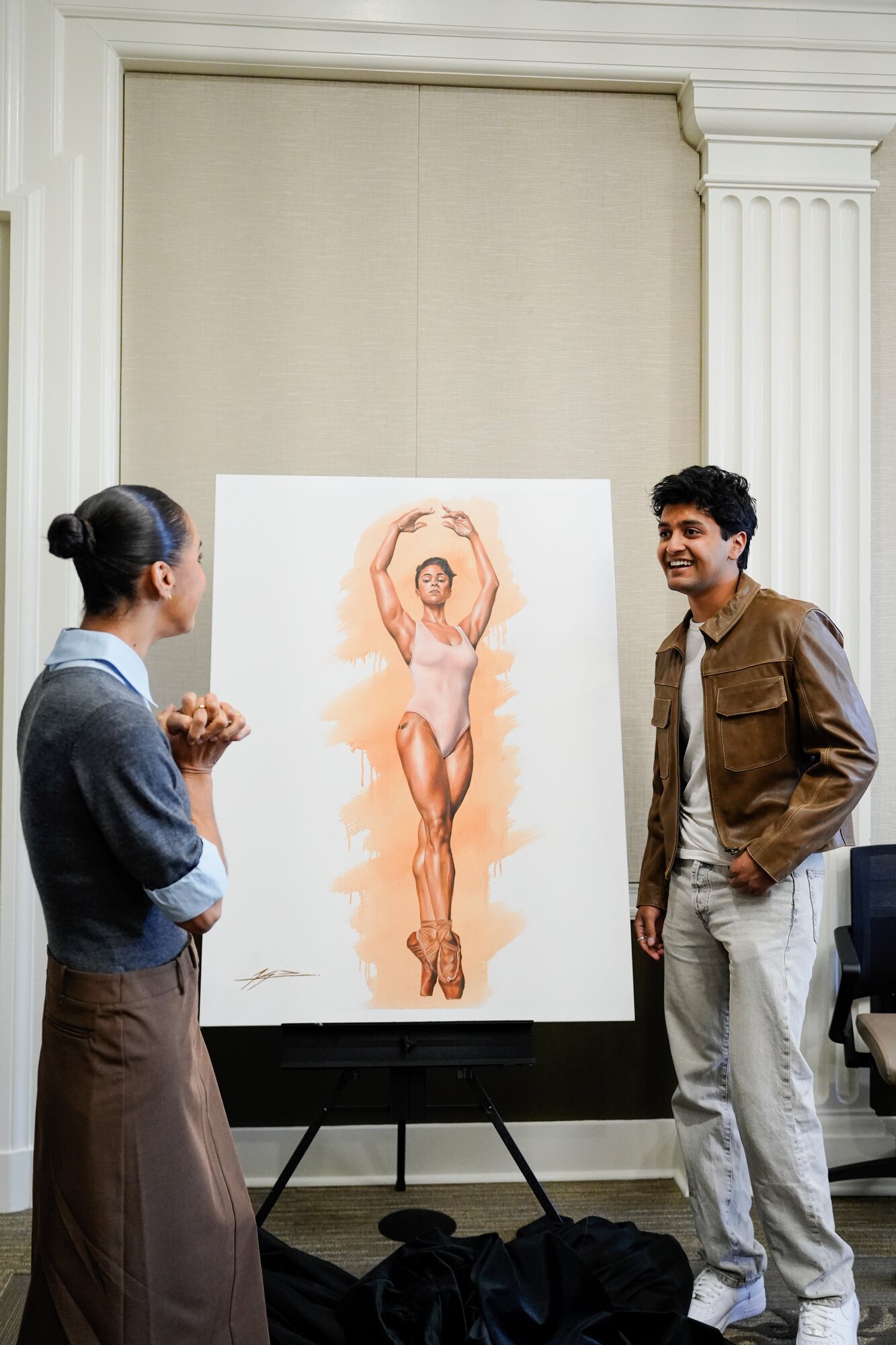
His commissions now extend beyond athletes to musicians, performers, coaches, and companies. His most recent painting features Young Thug. He has also painted singer Karan Aujla, basketball legend Magic Johnson, and ballet dancer Misty Copeland—a growing range of subjects across sport, music, and performance.
The business that began with a friend’s college announcement is now bringing his work into conversations he once hoped to be part of. Each new connection introduces his paintings to another audience and gives him another direction to explore. As that reach grows, he continues to build his name as a fine artist.
03
The Work
A commission starts with a conversation. A client reaches out to Kyan and his team, drawn to his paintings and trusting him to create something personal. Together, they discuss reference photographs, colors, and the moments they want the painting to hold. He wants to understand the story behind the image and what matters most to the client.
“I have a lot of creative control,” he says. The photographs give him a starting point, with room to bring his own approach to the painting. He works toward what the client has in mind while making the choices that give the piece his particular touch.
From there, he works section by section. Instead of adding a layer across the whole painting and returning to each area later, Kyan concentrates on one part at a time. He might begin with the face, working through the skin tones, facial features, shadows, and highlights before moving to an arm or the jewelry. Leaving every area partly finished makes the painting feel unresolved to him. Finishing one section lets him see real progress and gives him something clear to work toward in the next. After the paint dries, he returns to add finer details.
The background comes last. He calls himself a messy painter, and leaving it until the end gives him more freedom to work on the subject without having to keep a finished background clean.
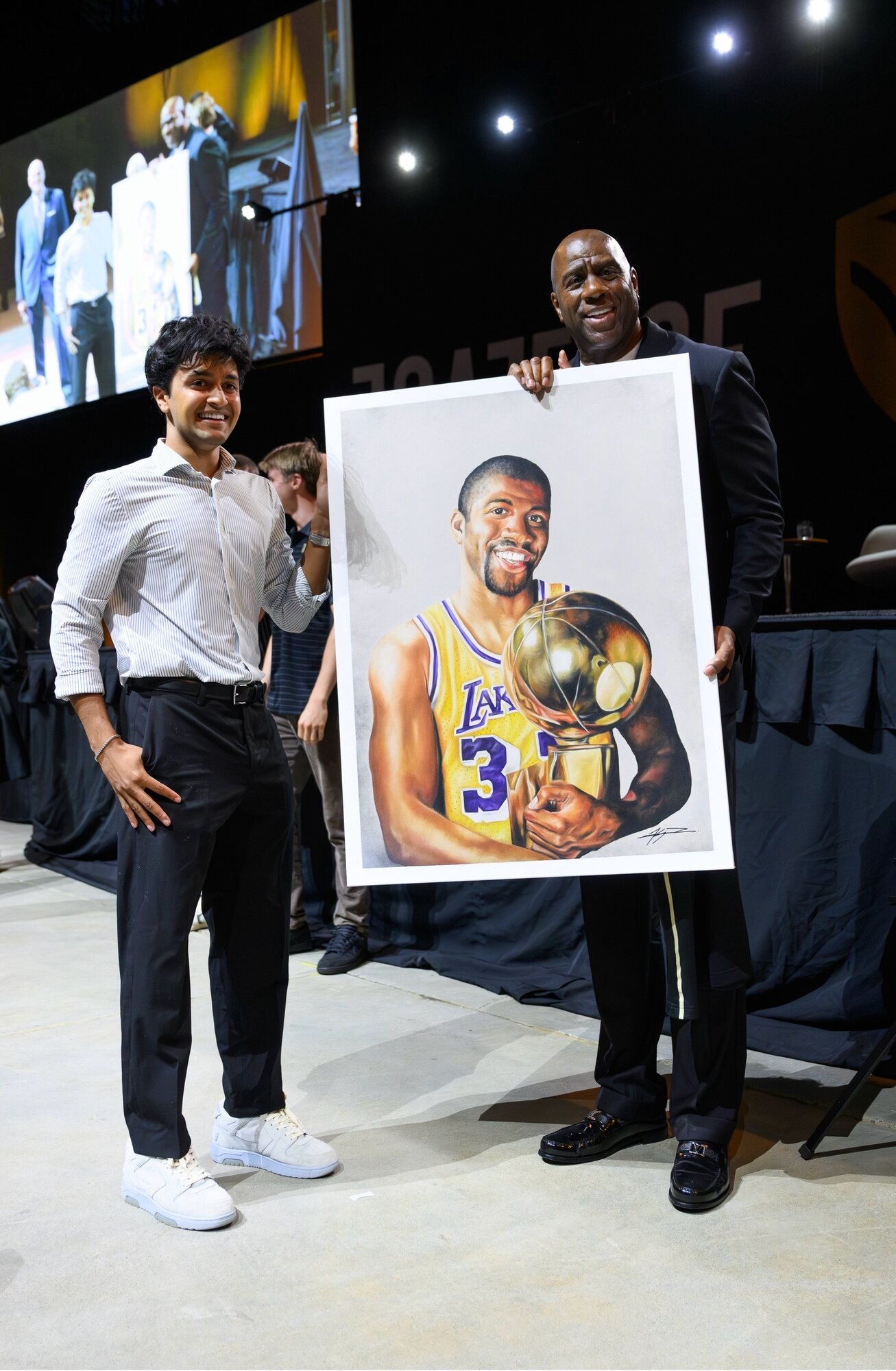
He is particular about the details: individual hairs, small highlights, and the depth that makes a face feel real. His direction in fine art is rooted in realism. He wants those details to come together so convincingly that someone initially mistakes the painting for a photograph.
Comparing his earliest paintings with his latest work, he can see that progress for himself. The details are finer, the depth more convincing. Seeing the difference gives him a sense of pride in how far his work has come.
His paintings are also finding a place beyond private homes. While interning at a company’s New York office, Kyan brought another side of himself into that professional setting. He created a painting for the company that now hangs in its lobby, combining realistic figures with abstract elements connected to New York City and the business. It gave him a chance to work beyond his usual portraits and bring his art into a place where he had first arrived as an intern.
Kyan’s days can vary, but the studio is a constant. On a regular day at Wake Forest, his alarm goes off around 6:30 a.m. He goes to the gym, eats, and attends class. If there is time between classes, he heads to the studio. His day always ends in the studio, working on a painting into the evening.
Wake Forest provided him with studio space as part of his Presidential Scholarship. It gives him a place to focus on his work while building a business as a full-time student. He is usually home around nine, though client deadlines and homework can make some nights much longer.
While painting, he listens to podcasts, music, or a show he can follow without watching every scene. Sometimes he talks to friends on FaceTime. During our interview, he answers my questions while continuing to paint. Apparently, we’re both getting some work done.
Outside the studio, social media connects the work with the person making it. On Instagram, he shares paintings alongside family, trips, sports, and photographs from his life. People who meet him at school or through a new connection discover his art when they follow him.
“I want people to see my work and recognize and put a face to it.”
His name is the name of his business: Kyan Patel. He wants people to recognize who made the painting and get to know the person behind it. He also hopes that sharing his work will encourage someone else to take their own talents and abilities seriously.
That visibility shows only part of what it takes to run the business. He says the past two summers were especially difficult for finding clients. In his experience, athletes have been more responsive during the season. Summer brings travel and other commitments that can make conversations slower. Many commissions arrive during the school year, when he is also balancing classes, assignments, and exams.
The work continues between painting sessions. Reference images need to be discussed, questions need answers, and changes need to be agreed upon. A detail the client wants included can lead to another conversation. Finding time for that exchange can be difficult when both schedules are full. Collaborative posts take coordination, too.
By the time a painting is finished, those conversations are no longer visible. Neither are the gaps between replies, the late nights, or the hours spent getting a detail right. The client sees the finished piece. Kyan knows everything it took to get there.
Running the business has taught him how much goes into making a career out of something he loves. There are slow periods, demanding schedules, and decisions beyond the canvas. He still loves the work. Seeing a painting come together—and knowing what it means to the person receiving it—makes the effort worthwhile.
“Every piece of jewelry, every hair, every highlight, every detail—I want someone to look at my work and not know whether it’s a photograph or a painting.”
— Kyan Patel
04
The Philosophy
“I'm never dreading going to my studio to work,” he says.
Kyan gets tired. He works late. Some days ask more of him than others. He still wants to work. Enjoying the work gives him a reason to keep going when a deadline is demanding or a piece takes longer than expected.
This is the starting point of his outlook: find something you genuinely enjoy, then give yourself the time to pursue it. For him, loving art has made the commitment to it feel worthwhile. The long hours are part of doing something he wants to build his life around.
Discipline gives that commitment a place in his day. There are athletes he wants to paint, brands he wants to work with, and opportunities he hopes to reach. Moving toward them requires him to make good use of the hours he has now.
His idea of success has changed with that routine. A finished painting goes online, people respond, and for a few hours—or perhaps a day—there is a rush of satisfaction. Soon he is thinking about the next piece. He once imagined the finish would be the most rewarding part. Now he gives more weight to everything it took to get there.
“It's the entire journey leading up to it.”
That includes the setbacks, the late nights, and the smaller moments when he can see himself improving. A difficult painting teaches him something about his technique. A slow period in the business teaches him patience. Managing both alongside school teaches him about his own habits. By the time the work is ready to share, it has already given him something.
Some of those lessons have come from his personal life, too. As he has devoted more time to art, school, and fitness, he has come to value a smaller circle of close friends. He appreciates people who show up for him, support what he is building, and give him the space to pursue it. Those are relationships he wants to give his own time and attention to.
People-pleasing is something he is still working through. He wants others to be happy and dislikes leaving tension unresolved. Sometimes that has meant putting someone else’s comfort ahead of his own needs. He is learning that being kind can also mean making a choice for himself, even when someone else would prefer a different one.
Sharing his work publicly brings other opinions into the picture. He receives messages about his paintings, his clients, and how he presents himself. Earlier, he was more likely to change something in response. Now he recognizes that adjusting to every opinion will not make everyone happy. It can also take him further from the work he actually wants to do.
“So just staying true to who I am and doing what I enjoy is the biggest thing.”
Other messages remind him why sharing matters. Younger people who once assumed they would follow a traditional career tell him that his work has helped them consider a creative path. He values being an example they can see: someone making art, finding clients, and building a business around it.
That response gives him another reason to share the process. He wants people to understand the time and commitment behind the paintings and to feel encouraged to explore what they might build themselves.
His own ambitions in fine art continue to grow. So does the standard he sets for each painting. He wants the work to reach more people, to open new opportunities, and to keep improving. Through all of it, he wants to hold on to what brought him this far: loving the work enough to return to it.
“The late nights, the struggles, the happy moments—that’s where success is built. That’s where you learn who you are.”
— Kyan Patel
05
What's Next
Kyan wants to build a name in fine art that people remember. When someone considers commissioning a painting, he wants his work to come to mind. The next stage of his career is about earning that recognition through the paintings he makes and the relationships he builds.
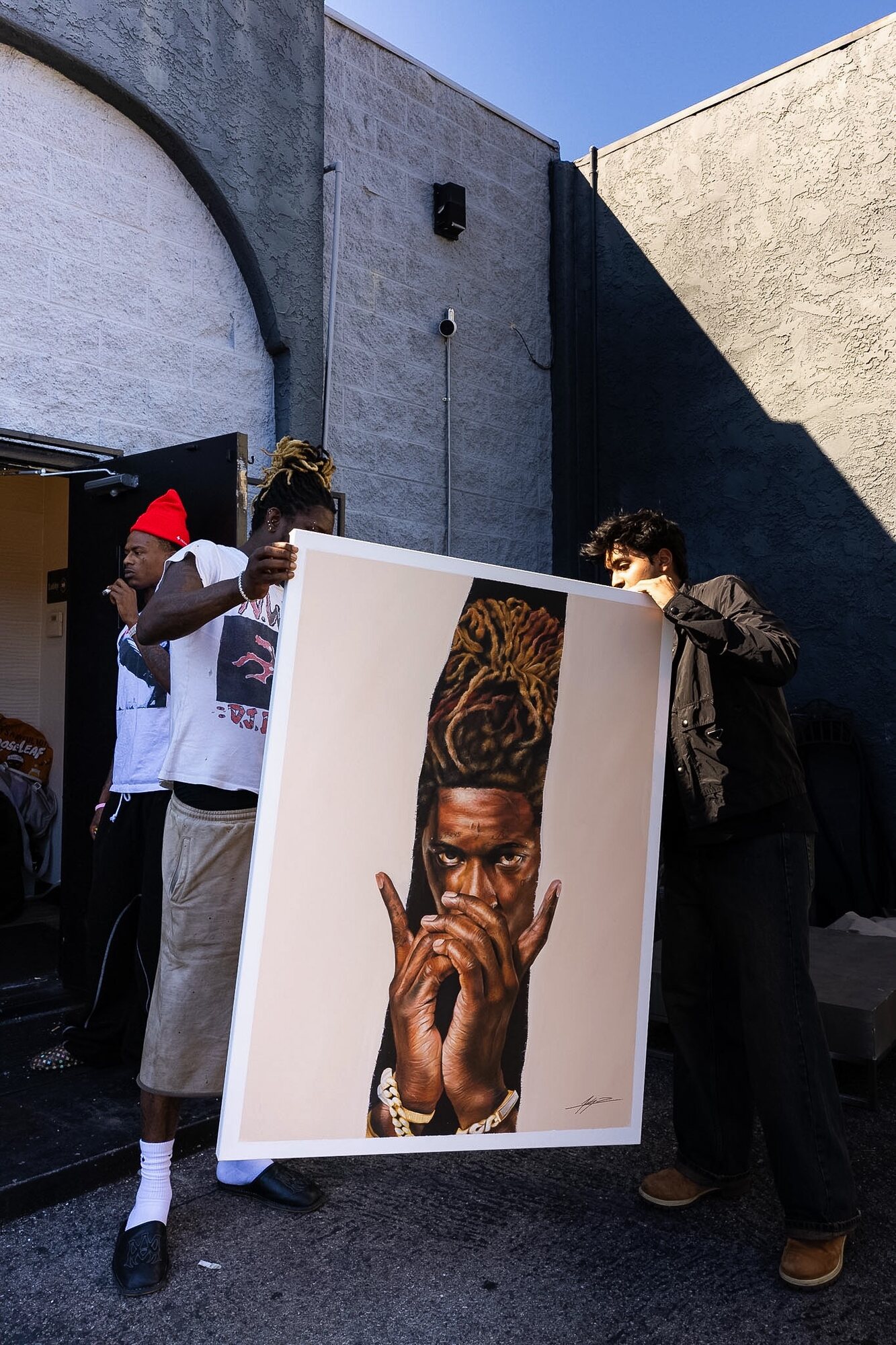
There are still clients he hopes to work with. New commissions can introduce his paintings to wider audiences, while meeting people and making connections can open doors he has not yet considered. He wants to keep expanding that network, bringing his work into new settings and giving more people a chance to encounter it.
In the studio, his direction is just as clear. He wants to take his realism further with every piece: finer details, more depth, and a closer understanding of how light gives a face its shape. He can already see that development in his recent work. His goal is to make someone pause, convinced they are looking at a photograph, then look again when they realize it is a painting.
He imagines work in athletes’ homes, stadiums, and sporting facilities, commissioned by people who want to bring art into the places where sport is lived and remembered. A painting can preserve a moment that matters to an athlete, a team, or the people who watched it happen. He wants to keep exploring what those moments can become on canvas.
Growing up, soccer held much of his attention. Art was another ability he had, but for years he thought of the two as separate parts of his life. His business has brought them together. The sports he played and followed now give him subjects, stories, and relationships to build his paintings around.
When I ask him to look ten years ahead, he knows the direction he wants to take: becoming an established voice in fine art, with work people recognize as his own. That future leaves room for new subjects and opportunities while keeping the connection between art and sport that helped him begin.
A question about AI brings another possibility into the conversation. Kyan believes the growth of generated images could make people place greater value on something made by a human hand. He thinks that could strengthen the demand for his work: a physical painting shaped by someone’s time, skill, and individual decisions. It is his prediction, and it reflects what he values about the pieces he creates.
For Kyan, success also means continuing to do work he loves and encouraging others to explore what they could build themselves. Recognition matters, but so does wanting to return to the studio. He wants a career that gives him both.
Getting there will take more conversations, more connections, and more hours in front of a canvas. He knows the effort behind a finished painting, and he is ready to keep giving it. The future he imagines is taking shape the way his paintings do: one section at a time.
The Next Guest
Kyan's question for the next guest, adapted from the interview:
What is your definition of success?